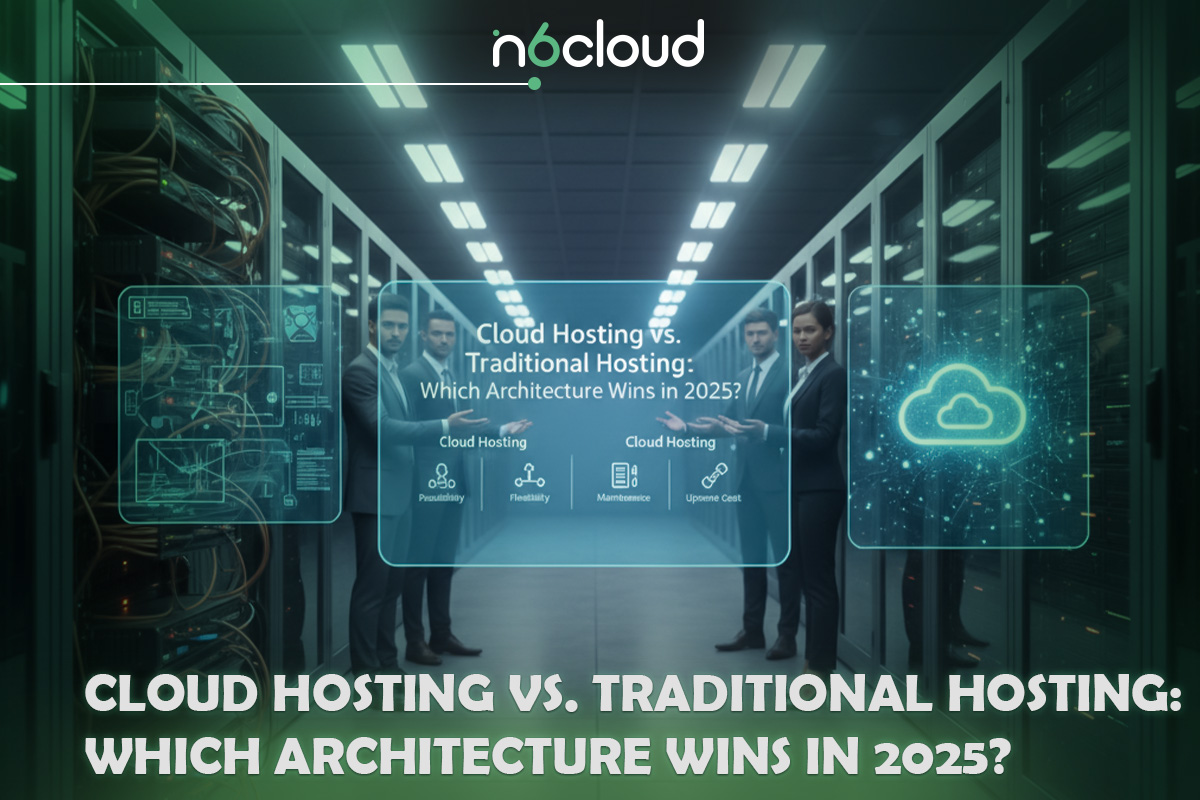
Choosing a hosting architecture used to be a fairly straightforward decision. Traditional hosting, whether shared or dedicated, was the default option for most websites and business applications. It offered fixed resources, predictable costs, and a familiar setup that worked well when traffic patterns were stable and online expectations were lower. In recent years, however, the way businesses use the internet has changed dramatically, and hosting choices have become far more strategic than they once were.
Cloud hosting has emerged as a modern alternative built for flexibility, resilience, and growth. Instead of relying on a single physical server, cloud hosting uses a network of interconnected servers that work together as one system. Resources can be allocated dynamically, performance can adapt to demand, and failures are handled without taking the entire service offline. As digital services become more critical to revenue and customer experience, these architectural differences matter more than ever.
In simple terms, traditional hosting is based on fixed capacity and physical boundaries, while cloud hosting is designed around elasticity and distributed infrastructure. Both approaches still have valid use cases, but they serve very different business needs. Understanding how each model works, and where their strengths and limitations lie, is essential for making an informed decision in 2025.
In an environment where even a single second of downtime can translate into lost sales, damaged trust, or missed opportunities, hosting is no longer just a technical detail handled in the background. It is a core part of your digital strategy. This comparison is designed to help IT decision makers, business owners, developers, and startups evaluate cloud hosting versus traditional hosting objectively, so they can choose an architecture that supports performance, reliability, and long-term growth without wasting budget or introducing unnecessary risk.
Quick Comparison: Cloud Hosting vs. Traditional Hosting at a Glance
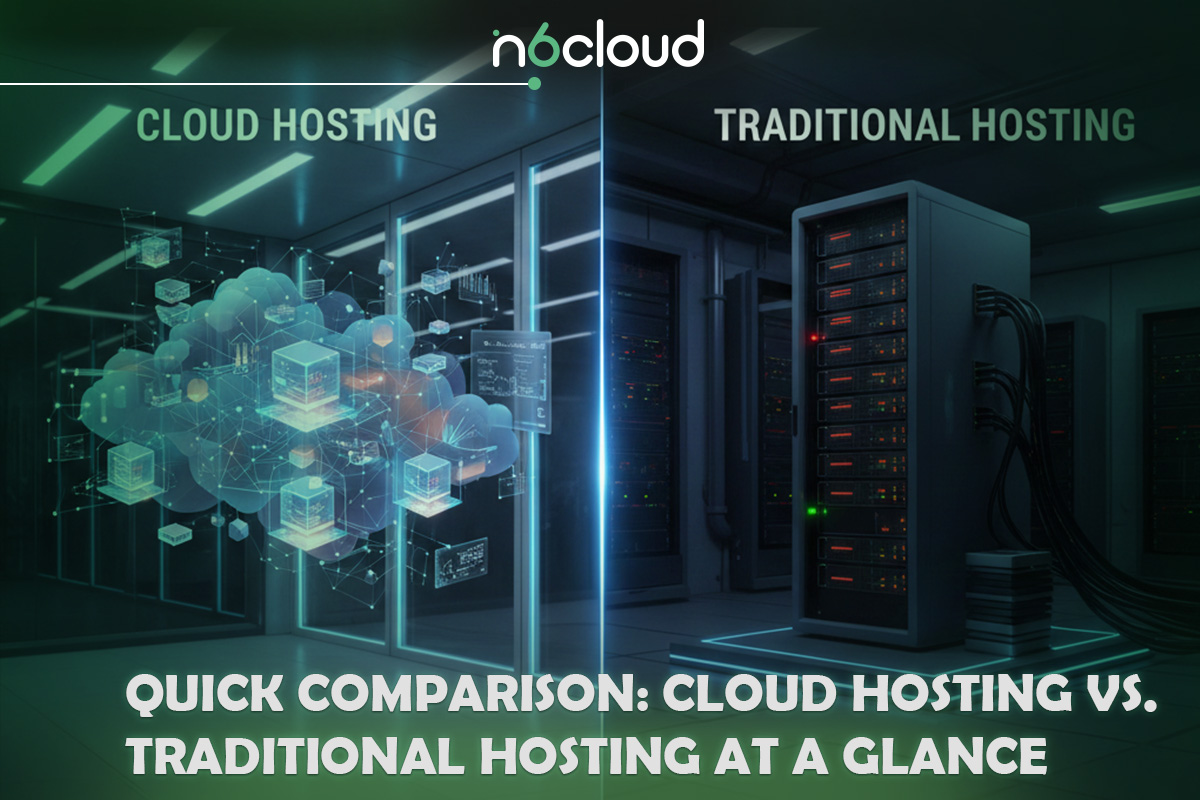
Before diving deeper into architecture and use cases, it helps to compare cloud hosting and traditional hosting at a high level. While both models can be configured to deliver strong performance and security, the way they achieve these outcomes is fundamentally different. Understanding these differences prevents common misconceptions and leads to better infrastructure decisions.
The most important distinction is that traditional hosting is tightly coupled to physical hardware, while cloud hosting abstracts workloads from the underlying servers. This abstraction does not automatically distribute a website across multiple nodes, but it does change how performance, reliability, and recovery are handled.
This comparison shows that cloud hosting does not magically eliminate all limitations, nor does traditional hosting lack modern features. The real difference lies in how each architecture responds to change. Traditional hosting prioritizes stability through fixed resources, while cloud hosting prioritizes adaptability through abstraction and automation.
The sections that follow explore these differences in more detail, focusing on scalability, performance, reliability, security, and cost so you can determine which model best supports your business goals in 2025.
Understanding Traditional Hosting: The Static Approach
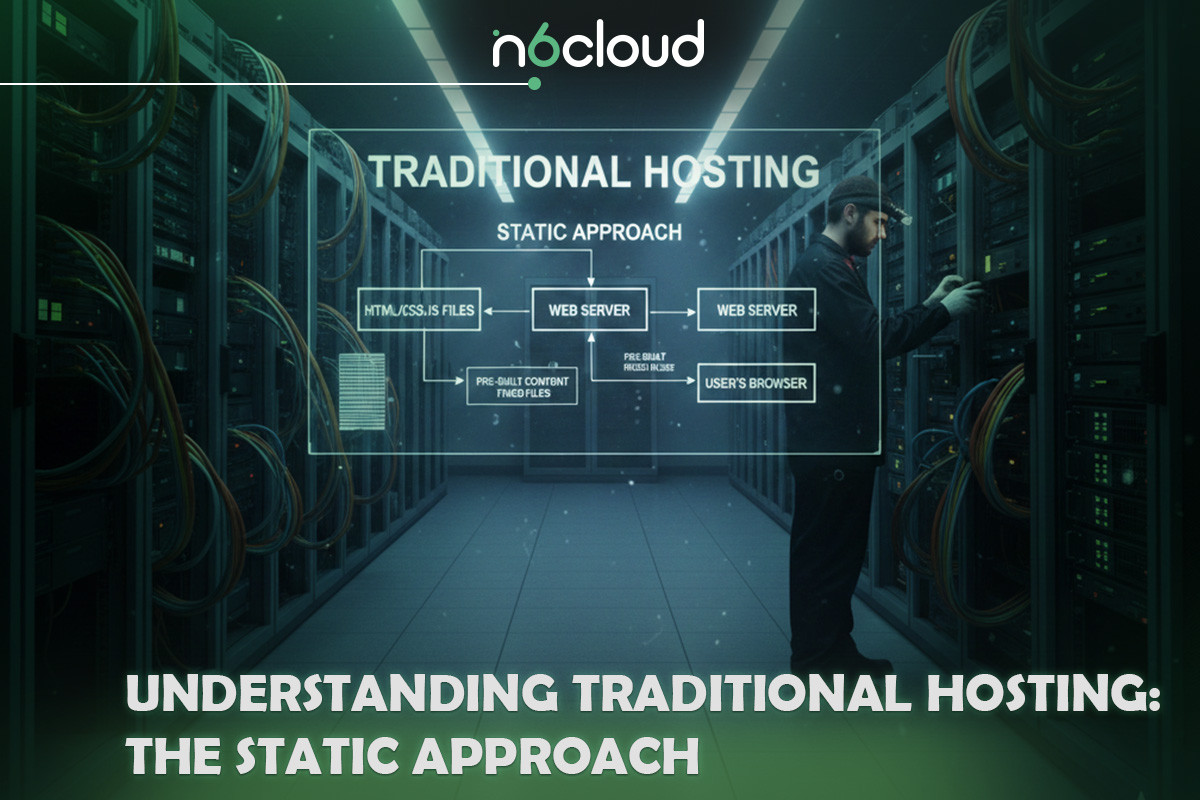
Traditional hosting has been the foundation of the web for decades, and it remains a familiar option for many businesses and developers. Its appeal lies in its simplicity and predictability. Resources are allocated upfront, the environment is well understood, and costs are usually fixed. For certain use cases, especially smaller or more stable websites, this model can still be an appropriate choice. To evaluate it properly, however, it is important to understand how traditional hosting actually works and where its limitations come from.
What Is Traditional Hosting?
Traditional hosting generally refers to environments where a website or application runs on a single physical server. This can take the form of shared hosting, where multiple websites coexist on the same machine and share its resources, or dedicated hosting, where one customer rents the entire server. In both cases, the key characteristic is that the workload is tied directly to a specific piece of physical hardware.
In shared hosting, resources such as CPU, memory, and disk are divided among many users. This keeps costs low but introduces variability, as one site’s activity can affect others on the same server. Dedicated hosting removes that contention by assigning the entire machine to one business, providing full control and consistent performance, but at a higher cost. Despite these differences, both models rely on a fixed-capacity server that must be upgraded or replaced when requirements change.
The Pros: Predictable Costs and Familiarity
One of the strongest advantages of traditional hosting is cost predictability. Pricing is usually fixed on a monthly or annual basis, making it easy to budget. Businesses know exactly what they are paying for, regardless of short-term fluctuations in traffic or usage. This can be reassuring for organisations with strict financial planning or limited tolerance for variable expenses.
Traditional hosting is also familiar to many IT teams and developers. The server behaves in a straightforward way, with direct access to the operating system and a clear understanding of where applications run. For teams that have managed physical servers in the past, this environment feels intuitive and requires little adjustment. For simple websites or internal tools with stable usage patterns, this familiarity can reduce operational complexity.
The Cons: Limited Scalability and Hardware Dependency
The main drawbacks of traditional hosting stem from its dependence on physical hardware. Because resources are fixed, scaling usually involves manual intervention. Adding more CPU, memory, or storage often requires downtime, server migration, or even purchasing new hardware. This makes it difficult to respond quickly to growth or sudden traffic increases.
Reliability is another concern. A traditional server represents a single point of failure. If the hardware experiences an issue, such as a disk failure or power problem, the entire service can become unavailable until the issue is resolved. While backups and redundancy can be implemented, they are typically separate systems that add cost and complexity.
These limitations do not make traditional hosting obsolete, but they do define its role. It works best in environments where demand is predictable, growth is modest, and the operational model values stability over flexibility. As business needs become more dynamic, these constraints are often what drive organisations to consider cloud-based alternatives.

Understanding Cloud Hosting: The Elastic Evolution
Cloud hosting represents a shift away from the fixed, hardware-bound model of traditional hosting toward an architecture designed for change. Instead of treating servers as static machines with predefined limits, cloud hosting treats infrastructure as a pool of resources that can be allocated, adjusted, and recovered dynamically. This approach aligns more closely with how modern businesses operate, where demand can change quickly and downtime carries real financial consequences.
How Cloud Hosting Works
At the core of cloud hosting is virtualization. Physical servers in a data centre are equipped with a hypervisor, a software layer that allows the hardware to be divided into multiple independent virtual machines, often referred to as VMs. Each virtual machine functions like a standalone server, with its own operating system, storage, and allocated computing power, even though it shares the underlying hardware with other VMs in a secure and isolated way.
What distinguishes cloud hosting from traditional virtual servers is how these virtual machines are managed at scale. Resources such as CPU, memory, storage, and networking are drawn from a shared pool rather than being locked to a single physical machine. If the physical host running a VM encounters a problem, the workload can be restarted or migrated to another host within the same infrastructure. This abstraction layer removes the tight dependency on individual pieces of hardware and allows the platform to prioritise availability and recovery.
It is important to note that, in most standard deployments, a website or application still runs on a single virtual machine at any given time. Cloud hosting does not automatically distribute an application across multiple nodes unless it is specifically designed to do so using load balancing or clustering. The advantage lies in how easily that single node can be resized, replaced, or integrated into a broader architecture when needed.
The Pros: Availability, Flexibility, and Growth Readiness
One of the strongest advantages of cloud hosting is availability. Because workloads are not permanently tied to a single physical server, the risk of prolonged downtime caused by hardware failure is significantly reduced. Cloud platforms are built with redundancy in mind, using multiple hosts, storage systems, and network paths to keep services running even when individual components fail.
Flexibility is another defining benefit. Cloud hosting allows businesses to adjust resources as requirements change, without long planning cycles or disruptive migrations. Whether traffic grows gradually or spikes suddenly due to a campaign or seasonal demand, additional capacity can be provisioned quickly. This pay-as-you-grow model supports experimentation and faster time-to-market, especially for startups and growing digital businesses.
Cloud hosting also simplifies disaster recovery and business continuity planning. Features such as automated snapshots, off-site backups, and data mirroring can be integrated directly into the infrastructure. While similar protections can exist in traditional environments, they are often more complex and costly to implement. In the cloud, these capabilities are easier to standardise and manage.
The Cons: Cost Variability and Operational Complexity
Despite its advantages, cloud hosting is not without trade-offs. One of the most common concerns is cost variability. Because billing is often tied to actual resource usage, monthly expenses can fluctuate if workloads are not monitored carefully. Without proper oversight, scaling resources or leaving unused services running can lead to higher-than-expected bills.
Operational complexity can also be a challenge, particularly in unmanaged cloud environments. Cloud platforms offer a wide range of configuration options, and making the most of them requires a certain level of expertise. Businesses without experienced technical staff may find it difficult to optimise performance, security, and cost on their own. This is where managed cloud services often play an important role, helping bridge the gap between powerful infrastructure and day-to-day operational simplicity.
Cloud hosting is not a universal replacement for traditional hosting, but it is a natural evolution for businesses that need flexibility, resilience, and the ability to adapt quickly. Understanding both its strengths and its limitations allows organisations to decide whether this elastic model aligns with their growth plans and operational capabilities.

Critical Face-Off: 5 Key Differentiators
Now that both hosting models have been explained on their own terms, the real value comes from comparing them directly across the areas that matter most to businesses. This face-off focuses on five differentiators that influence performance, risk, and long-term return on investment. Rather than repeating feature lists, this section looks at how each architecture behaves under real operational pressure.
Scalability and Elasticity
Scalability is one of the clearest dividing lines between traditional hosting and cloud hosting. In a traditional environment, scaling is primarily vertical. This means upgrading the existing server by adding more CPU, memory, or storage, often requiring downtime or even a full migration to new hardware. The process is usually planned in advance and executed manually, which limits how quickly a business can respond to growth or unexpected demand.
Cloud hosting approaches scalability differently. While a workload may still run on a single virtual machine, that machine is not bound to fixed hardware. Resources can be increased quickly, and when applications are designed for it, additional instances can be added horizontally behind load balancers. This elasticity allows businesses to scale closer to real demand instead of forecasting months ahead and hoping estimates are accurate.
Performance and Latency
Performance in traditional hosting is closely tied to the physical server’s limits. As traffic increases or workloads become heavier, response times can degrade once the server approaches capacity. Because resources are finite, sudden traffic spikes can create bottlenecks that affect user experience until the issue is manually addressed.
In cloud hosting, performance benefits come from abstraction and flexibility rather than automatic distribution. A website typically runs on a single node, but that node can be resized or replaced quickly if demand increases. When combined with load balancing and caching, cloud infrastructure can handle higher concurrency more gracefully. Latency can also be reduced by placing workloads in data centres closer to users, something that is often easier to achieve in cloud environments.
Reliability and Uptime
Reliability is where architectural differences become most visible. Traditional hosting relies on a single server, which creates a clear single point of failure. If that server experiences a hardware issue, the service is unavailable until the problem is resolved. Redundancy can be built, but it usually requires additional hardware, configuration, and cost.
Cloud hosting is designed to minimise the impact of failures. Virtual machines are monitored continuously, and if underlying hardware fails, workloads can be restarted on healthy hosts. Storage systems often replicate data across multiple devices, reducing the risk of data loss. While outages can still occur, the architecture itself is built to recover faster and reduce downtime, supporting higher availability targets.
Security Protocols
Security is often misunderstood in cloud versus traditional comparisons. Both models can be secured effectively, and both can be misconfigured. Traditional hosting relies heavily on physical security, operating system hardening, and manually managed firewalls and backups. The strength of the setup depends largely on the expertise and discipline of the team managing it.
Cloud hosting shifts many security controls into software. Firewalls, access rules, backups, and snapshots are often managed centrally and can be automated. This does not eliminate responsibility for application-level security, but it does make it easier to apply consistent policies and recover from incidents. For many organisations, this improves security posture simply by reducing human error and manual processes.
Cost Structure and Financial Impact
The financial model behind each architecture influences how businesses plan and grow. Traditional hosting typically follows a capital expenditure approach, with fixed monthly fees that reflect allocated hardware rather than actual usage. This can feel predictable, but it often means paying for idle capacity or facing sudden upgrade costs when limits are reached.
Cloud hosting follows an operational expenditure model, where costs scale with resource consumption. This aligns spending more closely with business activity and can improve cost efficiency over time. However, it also requires active monitoring to avoid waste. From a strategic perspective, cloud hosting often delivers better return on investment for businesses that value flexibility, rapid scaling, and reduced downtime.
Taken together, these five differentiators show that the choice between cloud hosting and traditional hosting is not about which technology is newer, but about which model matches how your business operates. Understanding these differences helps decision makers choose an architecture that supports both current workloads and future ambitions.

Which One Is Right for Your Business?
After comparing cloud hosting and traditional hosting across performance, reliability, security, and cost, the final decision comes down to how your business operates today and how you expect it to evolve. Neither architecture is universally superior in every scenario. Each serves a different type of workload and business mindset, and choosing the wrong one often leads to unnecessary cost or operational friction.
Traditional hosting is generally a good fit when stability and predictability outweigh the need for flexibility. If you run a small website with consistently low traffic, such as a company brochure site, a personal blog, or a local business presence that rarely experiences spikes, traditional hosting can be sufficient. Fixed monthly pricing makes budgeting straightforward, and the familiar server model reduces complexity for teams that prefer a simple, well-understood environment. In these cases, the limitations around scalability and redundancy may never become a real issue.
Cloud hosting becomes the stronger choice when growth, variability, or availability are critical to the business. E-commerce platforms, SaaS products, membership sites, and content-heavy applications often experience unpredictable traffic patterns. A marketing campaign, seasonal sale, or sudden surge in demand can overwhelm fixed infrastructure. Cloud hosting is designed to absorb these changes with minimal disruption, reducing the risk of slowdowns or outages that directly affect revenue and customer trust.
Cloud hosting is also better suited for businesses that treat uptime as non-negotiable. When applications are customer-facing or revenue-generating, even short outages can have measurable financial impact. The ability of cloud infrastructure to recover quickly from hardware failures and support high availability architectures makes it a more resilient foundation for critical systems. For startups and growing companies, this resilience often outweighs concerns about variable monthly costs, especially when combined with proper monitoring and cost controls.
Ultimately, the right choice depends on whether your infrastructure needs are static or dynamic. Traditional hosting works best when change is rare and workloads are predictable. Cloud hosting excels when adaptability, speed, and resilience are essential to how the business competes and grows.
Transitioning to the Future with N6 Cloud
For many businesses, the decision is not simply cloud or traditional, but how to move forward without increasing complexity. This is where the right provider makes a meaningful difference. Modern cloud platforms no longer require deep in-house expertise to deliver strong performance and reliability. With the right balance of automation and human support, cloud infrastructure can be both powerful and easy to manage.
N6 Cloud is designed to bridge this gap by offering high-performance cloud infrastructure that remains accessible to small and medium-sized businesses. Instead of forcing customers to navigate overly complex platforms, the focus is on delivering scalable, resilient environments backed by clear pricing and expert support. This approach allows businesses to benefit from cloud architecture without being overwhelmed by operational overhead.
Whether you are migrating from a traditional server or launching a new project, choosing a managed Cloud Hosting solution helps ensure that scalability, security, and uptime are built in from the start. With infrastructure designed for growth and reliability, businesses can focus on delivering value to their customers rather than managing servers.
If your goal is to scale without limits while maintaining control over cost and performance, moving toward a cloud-based architecture is a logical next step. With the right partner, that transition becomes not just manageable, but a competitive advantage.