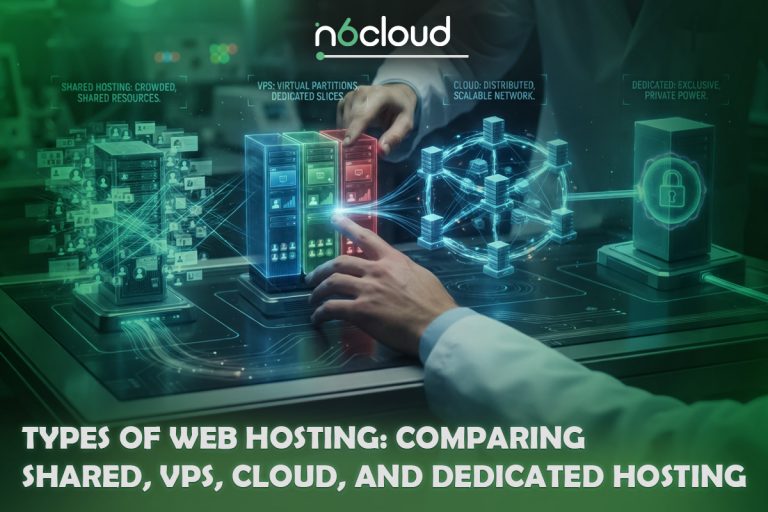
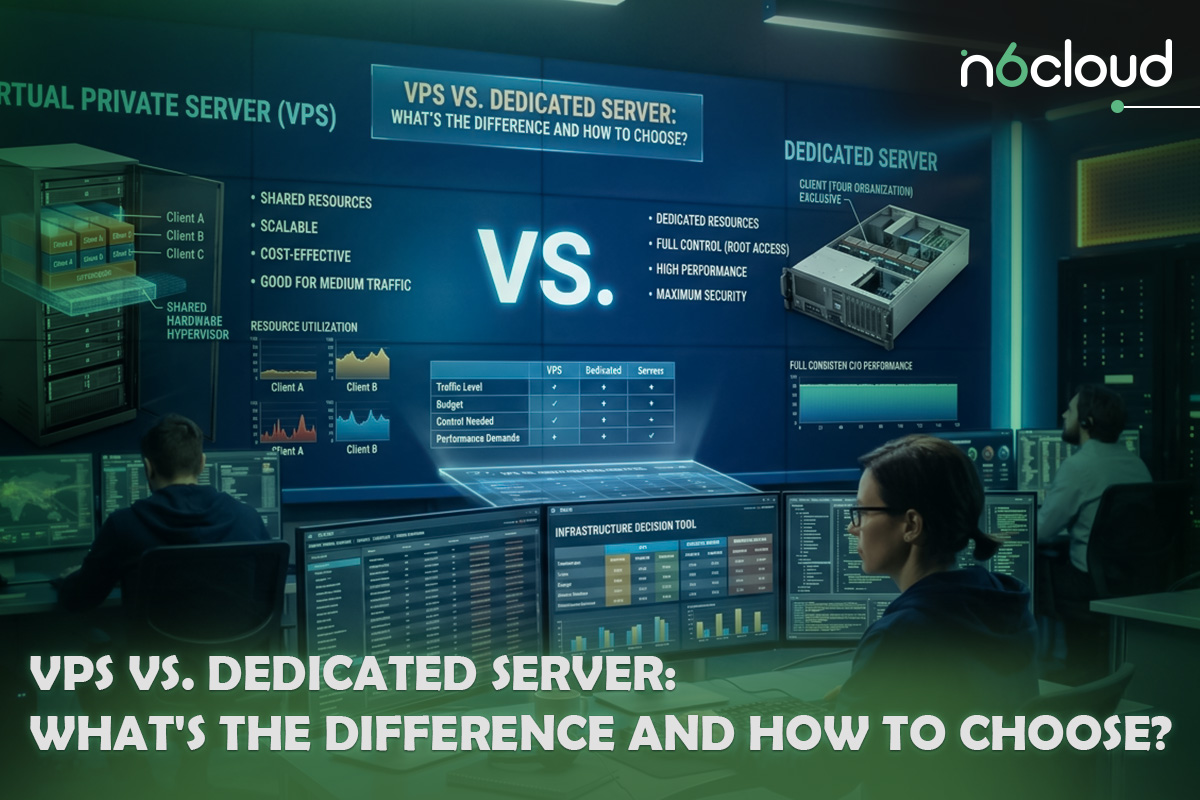
In a VPS environment, a physical server is divided into multiple Virtual Machines using hypervisor technology such as KVM. Each VM receives allocated CPU, RAM, and NVMe storage resources and operates independently with its own operating system. These resources are logically isolated, meaning other virtual machines cannot access your environment.
However, the physical hardware itself is shared among multiple virtual instances. While virtualization provides strong isolation and predictable allocation, it does not provide physical exclusivity.
A Dedicated Server follows a single-tenant architecture. The entire physical machine, including all processor cores, memory modules, and storage devices, is assigned to one client. There is no virtualization layer dividing hardware among different users. This results in complete hardware control and performance consistency even during sustained high-load scenarios.
This architectural distinction is the foundation of every other difference we will examine next.
What is VPS Hosting?
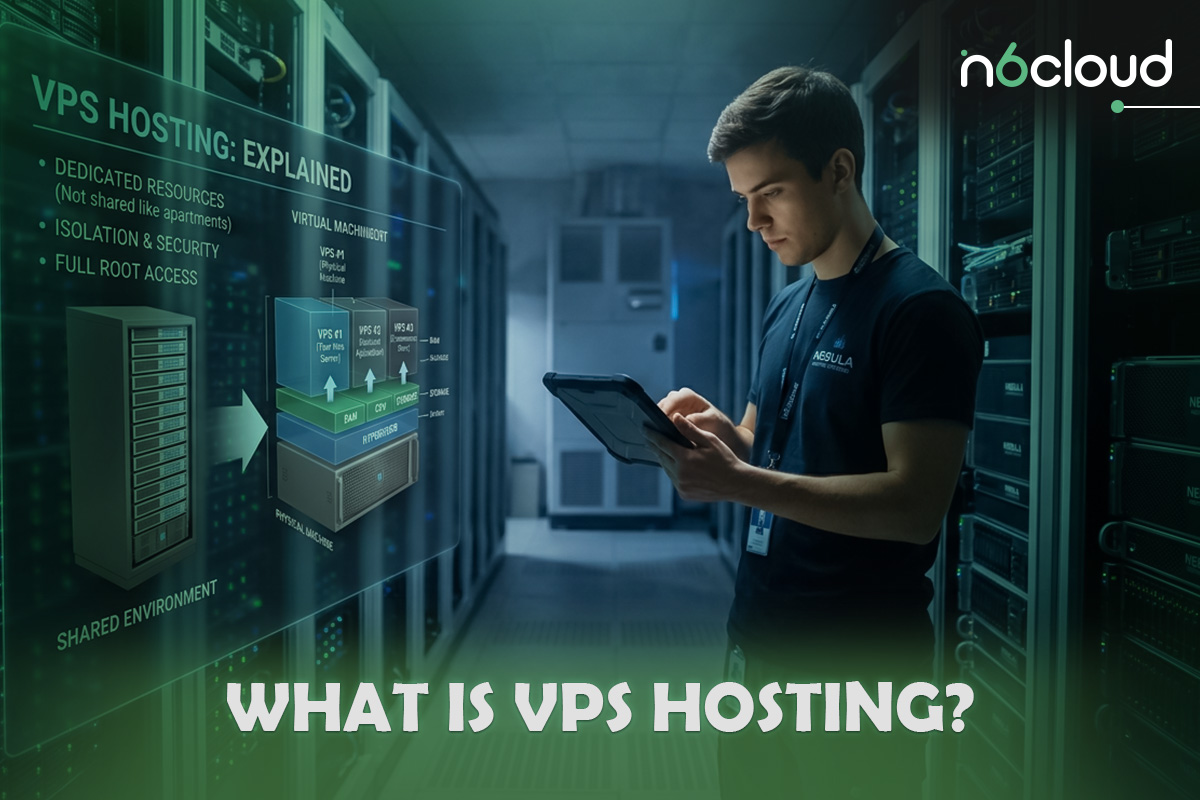
A Virtual Private Server, commonly referred to as a VPS, is a virtualized hosting environment created by dividing a powerful physical server into multiple independent Virtual Machines. Each Virtual Machine operates as a self-contained system with its own operating system, allocated CPU, RAM, storage, and root access. From the user’s perspective, it behaves very much like a standalone server.
The technology that makes this possible is called a hypervisor. In modern infrastructures, including KVM-based environments, the hypervisor sits between the physical hardware and the virtual machines. It is responsible for allocating resources such as processor time, memory, and storage to each VPS while maintaining isolation between them. This isolation ensures that one virtual server cannot access another server’s files or processes.
Although multiple VPS instances run on the same physical machine, they are logically separated at the virtualization layer. This model is known as logical isolation. Each VPS has its own kernel instance, system libraries, network stack, and administrative control. You can install software, configure services, deploy applications, and manage security policies just as you would on a physical server.
Modern VPS environments are typically backed by high-speed NVMe storage, which significantly reduces I/O latency compared to traditional SATA-based systems. When combined with KVM virtualization, NVMe storage enables virtual servers to efficiently handle database queries, API calls, and dynamic website workloads. For many growing businesses, this level of performance is more than sufficient.
VPS hosting is often chosen as a strategic upgrade from shared hosting. It provides greater stability, more predictable performance, and stronger isolation, without the higher cost of fully dedicated hardware.
How a Virtual Private Server Works
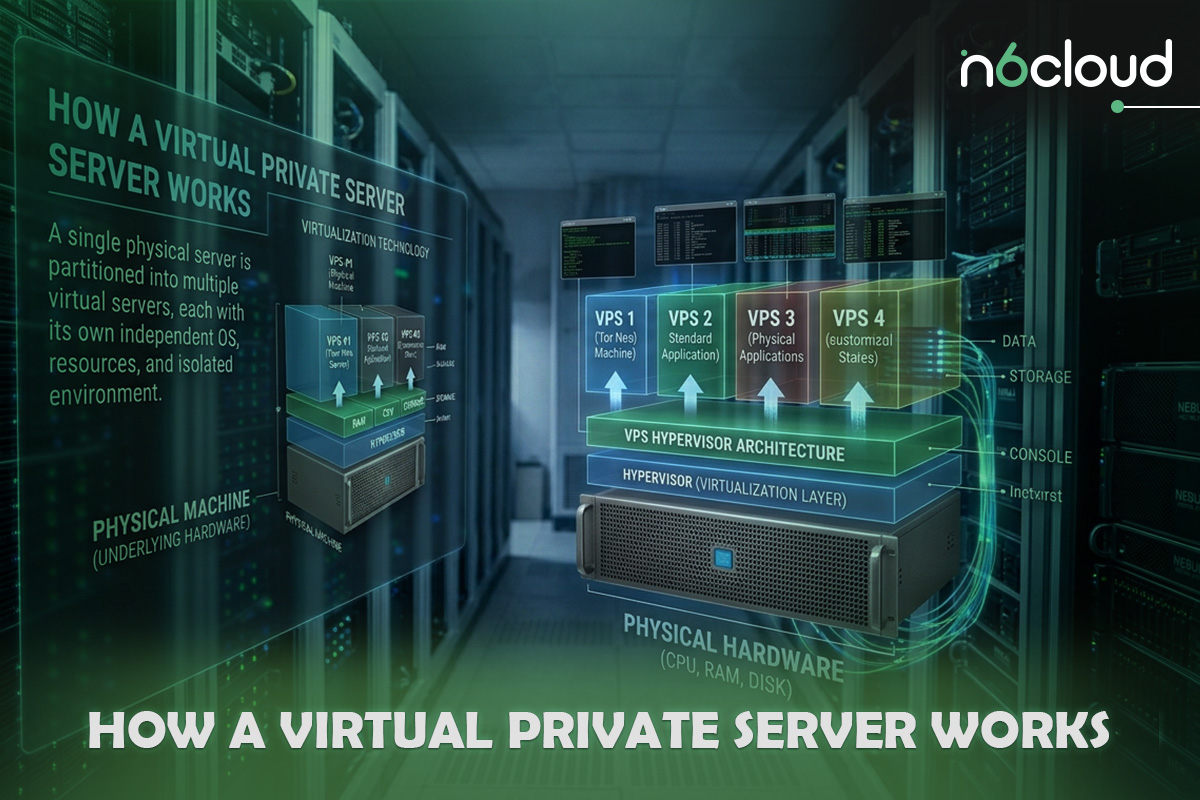
At the hardware level, a VPS begins with a high-capacity physical server equipped with multi-core processors, large memory pools, and fast storage arrays. The hypervisor is installed directly on that hardware. It then creates multiple Virtual Machines, each assigned a defined portion of CPU, RAM, and storage.
When your application requests processing power, the hypervisor schedules CPU time accordingly. When your database writes data, it interacts with the allocated storage layer assigned to your virtual environment. While the hardware is shared, your allocated resources are reserved within the virtualization framework.
This architecture enables rapid provisioning. A new VPS can often be deployed quickly without waiting for physical hardware to be installed. It also enables vertical scaling, where CPU, RAM, or storage allocations can be increased without replacing physical equipment.
Pros and Cons of a VPS
Pros
- Lower entry cost compared to physical servers
- Strong logical isolation through hypervisor technology
- Root access for full administrative control
- Rapid provisioning and scaling
- Available in both managed and unmanaged configurations
Cons
- Physical hardware is shared at the host level
- Hardware-level customization is limited
- Maximum performance ceiling depends on the underlying node capacity
A VPS represents a balance between flexibility, control, and cost efficiency. It delivers significantly more power and isolation than shared hosting while remaining more accessible than a fully dedicated machine.
In the next section, we will examine how Dedicated Server hosting differs at the architectural level and why physical isolation changes the performance and control equation.
What is Dedicated Server Hosting?
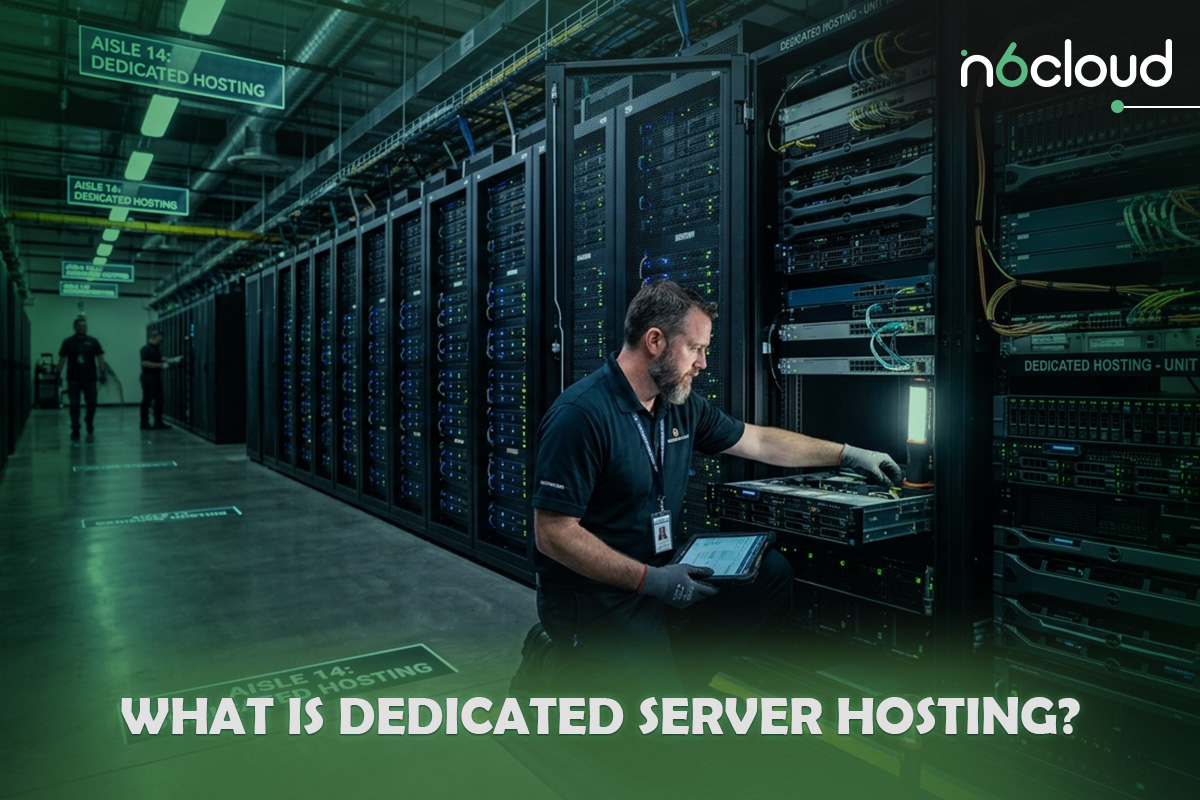
A Dedicated Server, often referred to as bare-metal hosting, is a physical server assigned entirely to a single client. Unlike a VPS, there is no hypervisor dividing the system into multiple virtual machines for different users. The entire machine operates under a single tenant. This model, known as single-tenant architecture, forms the foundation of dedicated hosting.
In a dedicated environment, every hardware component on the server is allocated exclusively to a single organization. All CPU cores, memory modules, storage devices, and network interfaces are reserved for that single workload. There is no logical partitioning of hardware between multiple customers. This is what creates physical isolation.
Because there is no virtualization layer between the operating system and the hardware, applications interact directly with the physical components. When a request requires processing power, it is executed on the machine’s actual CPU cores. When a database writes data to disk, it communicates directly with the storage subsystem without hypervisor-level scheduling. This direct hardware access eliminates virtualization overhead and provides highly predictable behaviour under sustained load.
Dedicated servers are commonly built with enterprise-grade processors, such as Intel Xeon families, and configurable storage systems that may include NVMe, SSD, or HDD drives. Hardware RAID controllers are often used to provide redundancy or optimize disk performance. Since all resources are physically exclusive, the server’s full capacity is available to a single tenant at all times.
This architecture becomes particularly important for workloads that demand consistency. Large relational databases, analytics platforms, ERP systems, and high-traffic transactional websites often require stable I/O throughput and uninterrupted CPU availability. In such environments, even minor resource contention can introduce latency spikes. Physical isolation eliminates that risk.
At the same time, dedicated infrastructure requires more planning. Hardware upgrades involve physical changes or migration to a new machine. Scaling is not as instantaneous as adjusting virtual resources in a VPS environment. As a result, dedicated servers are typically selected when long-term performance requirements justify the additional investment and operational commitment.
Pros and Cons of a Dedicated Server
Pros
- Complete physical isolation
- No noisy neighbour effect
- Maximum and consistent performance under sustained load
- Full access to all physical CPU cores and RAM
- Hardware-level configuration options, such as RAID tuning
- Ideal for performance-sensitive and high-throughput workloads
Cons
- Higher monthly cost compared to VPS
- Hardware upgrades require planning or migration
- Scaling is not instantaneous
- Greater operational responsibility in unmanaged setups
A Dedicated Server is designed for situations where you need full physical control and highly predictable performance. The benefits are clear when your workloads are heavy, latency-sensitive, or compliance-driven. The trade-off is that dedicated infrastructure usually costs more and requires more operational planning, especially when you manage it yourself.
6 Key Differences Between VPS and Dedicated Servers
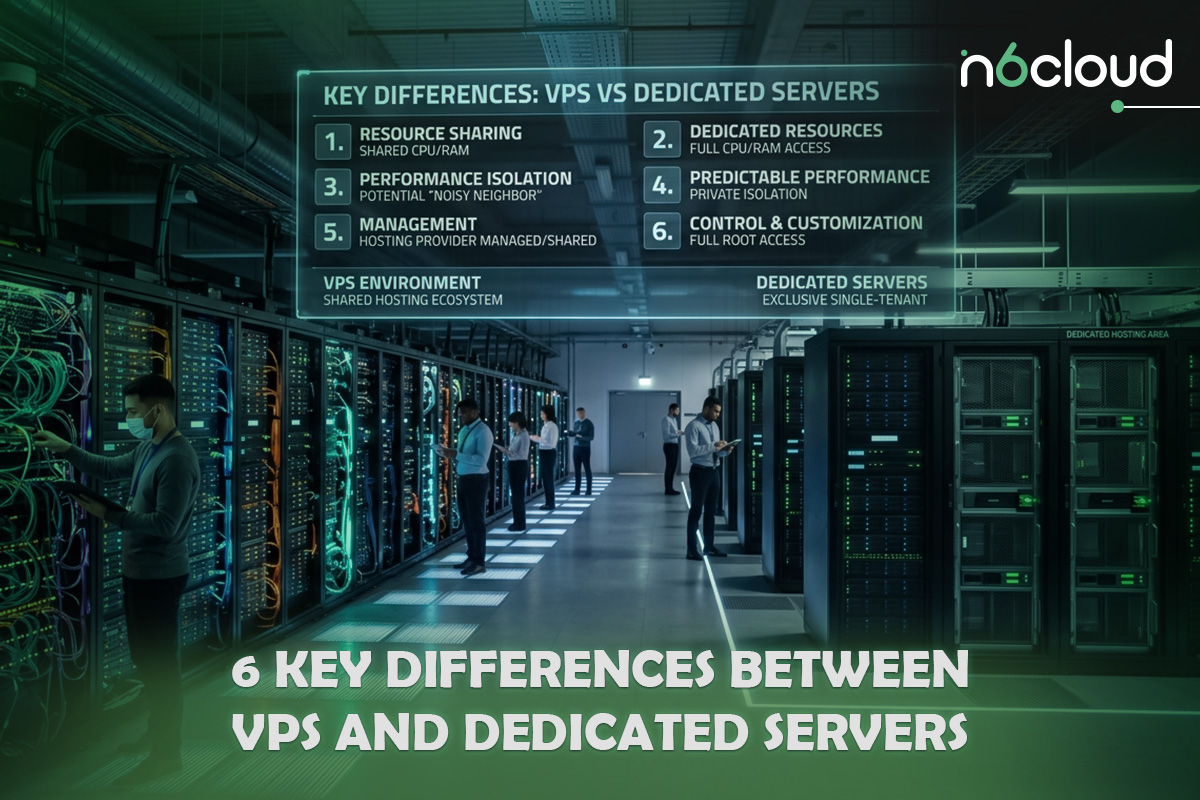
At a high level, both VPS and Dedicated Servers provide significantly more control and performance than shared hosting. The real distinction lies in how resources are allocated, how performance behaves under load, how security isolation is structured, and how scaling is implemented. The following six differences define the practical impact of choosing one model over the other.
1. Resource Allocation and the Noisy Neighbour Effect
In a VPS environment, resources are allocated through a hypervisor. Each Virtual Machine is assigned CPU, RAM, and storage, and these allocations are logically isolated from those of other virtual machines on the same host. From the operating system’s perspective, the VPS behaves like an independent server.
However, the physical hardware is still shared. Although the hypervisor enforces isolation and scheduling rules, workloads ultimately run on the same underlying processor and storage subsystem as other virtual instances. If other tenants generate unusually high demand, it can influence overall hardware contention. This phenomenon is commonly referred to as the noisy neighbour effect.
In contrast, a Dedicated Server eliminates this scenario entirely. Because the entire physical machine is assigned to a single tenant, no other workloads compete for CPU cycles, disk I/O, or memory bandwidth. Resource allocation is physically exclusive, not just logically defined. This provides consistent behaviour even during sustained high utilization.
2. Performance, Speed, and I/O Latency
Performance differences between VPS and Dedicated Servers often become noticeable under heavy workloads. A modern VPS powered by NVMe storage can deliver excellent speed for web applications, APIs, and mid-sized databases. Virtualization overhead in KVM environments is minimal, and for many business use cases, the performance gap is negligible during normal operation.
The difference becomes clearer in high I/O scenarios. Large transactional databases, real-time analytics systems, or applications that generate thousands of concurrent writes can push disk subsystems to their limits. On a VPS, disk operations are scheduled by the hypervisor and shared among virtual machines. While well-managed environments minimize contention, the storage layer is not physically exclusive.
A Dedicated Server allows direct access to the storage subsystem and supports hardware RAID configurations for performance tuning or redundancy. Because no other tenants share the hardware, I/O latency remains predictable even during sustained heavy traffic. This makes dedicated infrastructure better suited to high-volume workloads that require consistent throughput.
3. Security: Logical vs Physical Isolation
Security in VPS environments relies on logical isolation. The hypervisor ensures that one Virtual Machine cannot access another tenant’s files or processes. Modern hypervisor technology is mature and secure when properly configured, and VPS hosting is suitable for most business applications.
However, isolation remains software-enforced. The hardware itself is shared between multiple tenants. For organizations operating under strict compliance requirements, such as healthcare systems subject to HIPAA considerations or companies concerned with data sovereignty regulations, physical separation can be an important factor.
A Dedicated Server provides physical isolation. The machine is assigned to a single organization, which eliminates cross-tenant hardware exposure. This distinction can simplify compliance audits and provide additional assurance for sensitive workloads. Regardless of the model chosen, proper server hardening and security best practices remain essential. For a deeper look at VPS security measures, you can review this guide:
https://n6cloud.com/blog/how-to-secure-a-vps-server/
4. Scalability and Upgrade Speed
Scalability is one of the strongest advantages of VPS hosting. Because resources are virtualized, increasing CPU, RAM, or storage often involves adjusting allocations within the hypervisor. This can typically be executed quickly without replacing physical hardware. Vertical scaling is straightforward, and horizontal scaling can be achieved by deploying additional virtual machines.
Dedicated Servers require a different approach. Upgrading memory, storage, or processor capacity usually involves hardware changes or migration to a new machine. This process takes longer and requires more planning. While dedicated infrastructure offers higher maximum performance ceilings, it does not provide the same immediate flexibility as virtualized environments.
5. Customization and Hardware Control
Both VPS and Dedicated Servers provide root or administrative access, allowing you to install applications, configure firewalls, and manage services. The key difference lies in hardware-level control.
In a VPS, you control the operating system and software stack but do not have access to the underlying physical hardware. The hypervisor abstracts kernel modules, storage controllers, and physical network interfaces. Hardware configuration options are therefore limited.
In a Dedicated Server, you control the entire hardware stack. You can configure RAID levels, optimize storage performance, and fully utilize all physical CPU cores and memory without virtualization constraints. For organizations that require deep system tuning, dedicated infrastructure offers greater flexibility.
6. Pricing and Total Cost of Ownership
Cost differences between VPS and Dedicated Servers extend beyond monthly pricing. VPS hosting generally has a lower entry cost and predictable billing. Because hardware is shared, infrastructure expenses are distributed across multiple tenants, making VPS an efficient choice for small to mid-sized workloads.
Dedicated Servers involve a higher monthly investment due to full hardware allocation. However, when workloads grow large enough to consistently consume high virtual resources, the long-term value of dedicated infrastructure can become more economical. At scale, paying for guaranteed full hardware capacity may provide better performance per dollar than maximizing a high-tier VPS.
Total Cost of Ownership also includes management effort. Virtualized environments simplify scaling and deployment. Dedicated infrastructure may require more planning and operational oversight, especially in unmanaged configurations.
Understanding these six differences creates a clear decision framework. The right choice depends on workload intensity, compliance requirements, performance expectations, and growth trajectory. In the next section, we will translate these technical distinctions into practical use cases to help you determine which model aligns with your specific scenario.
Use Cases: Which Hosting Solution is Right for You?
Understanding the architectural differences between VPS and Dedicated Servers is only useful if you can apply them to real-world scenarios. The right choice depends on workload intensity, expected growth, performance sensitivity, and operational capacity. Below are practical examples that help translate technical differences into business decisions.
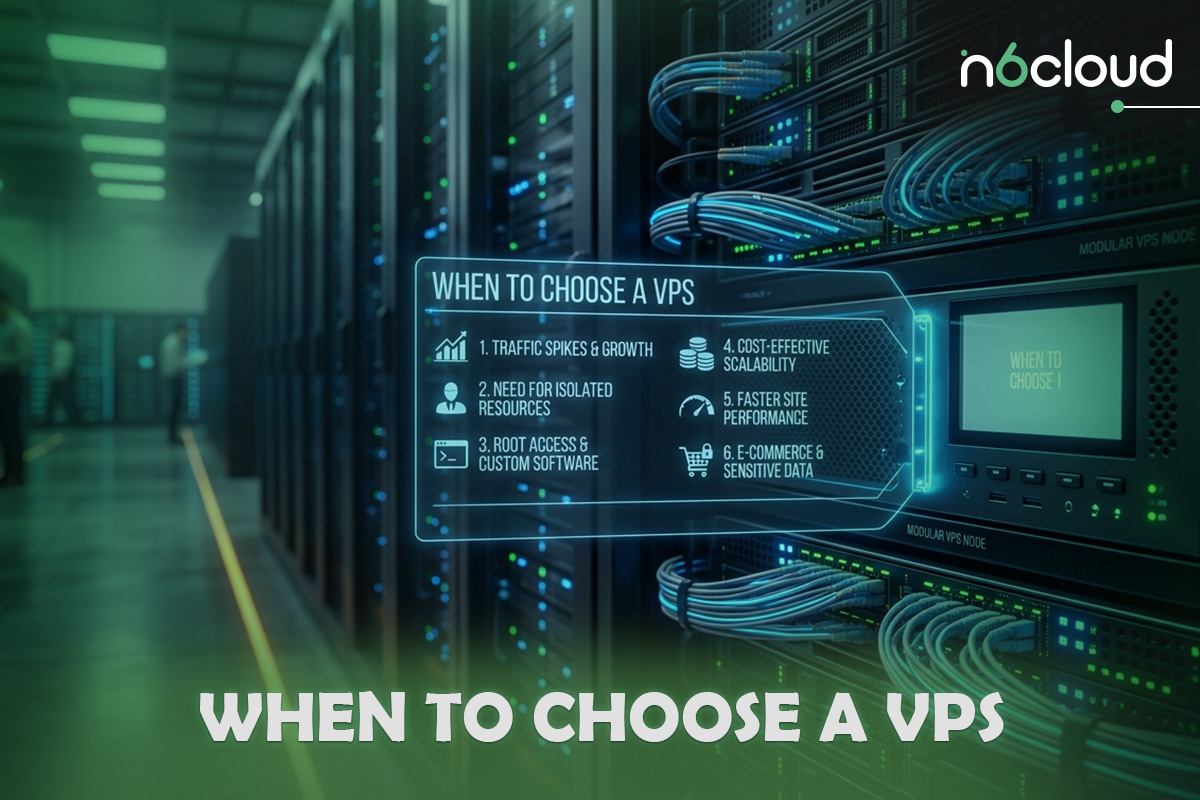
When to Choose a VPS
A VPS is often the right choice when you need predictable performance, strong isolation, and scalability without committing to full physical hardware.
SaaS startups often start with VPS infrastructure because it enables rapid deployment and flexible resource scaling. When user growth is uncertain, the ability to scale CPU, RAM, or storage without replacing hardware reduces financial risk.
Mid-sized eCommerce platforms also benefit from VPS hosting. With modern NVMe-backed virtualization and KVM isolation, a VPS can effectively handle product catalogues, transactional databases, and moderate traffic spikes. For many growing businesses, this level of performance is more than sufficient.
Development and staging environments are another strong fit. Teams can deploy multiple isolated environments, test new features, and replicate production behaviour without investing in physical servers. Vertical scaling makes it easy to adjust resources during testing cycles.
APIs, web applications, content management systems, and internal business tools typically run efficiently on VPS infrastructure as long as resource consumption remains within reasonable limits.
In short, a VPS is best suited for organizations that value scalability, cost efficiency, and operational flexibility while still requiring dedicated virtual resources.

When to Choose a Dedicated Server
A Dedicated Server becomes the better option when workloads demand full hardware exclusivity and highly predictable performance under heavy stress.
Large relational databases, ERP systems, and financial platforms often generate sustained high CPU and disk I/O usage. In these scenarios, eliminating hardware-level contention provides more consistent latency and throughput.
High-traffic eCommerce environments processing thousands of concurrent transactions can also benefit from dedicated infrastructure. When application performance directly impacts revenue, physical isolation reduces risk.
Analytics platforms, reporting engines, and data processing pipelines frequently require stable access to CPU and storage resources for extended periods. Dedicated servers are well-suited to these continuous workloads.
Organizations with strict compliance or regulatory requirements may also prefer dedicated infrastructure due to physical separation from other tenants.
A Dedicated Server is typically chosen when performance ceilings matter more than short-term scaling flexibility.
Which Is Better for Gaming Servers?
Although gaming hosting may not be the primary goal for every infrastructure provider, the technical principles still apply.
Small community-based game servers, such as limited-player Minecraft environments, can operate effectively on a well-configured VPS. Virtualized environments provide enough CPU and memory for moderate player counts while keeping costs manageable.
However, large multiplayer communities with high concurrency and real-time interaction requirements benefit from Dedicated Servers. Game engines are highly sensitive to latency spikes and CPU scheduling delays. Physical exclusivity reduces the risk of performance fluctuations and helps maintain stable tick rates.
The choice depends largely on player volume and performance sensitivity. For casual or smaller communities, a VPS is often sufficient. For competitive or large-scale multiplayer ecosystems, dedicated hardware provides more consistent results.
Build Your Ideal Infrastructure with N6Cloud
Selecting between a VPS and a Dedicated Server ultimately comes down to aligning infrastructure with your workload profile and growth strategy. There is no universal answer. Some organizations need flexible virtualized environments that can scale quickly as demand evolves. Others require physically exclusive hardware that delivers consistent performance under sustained high utilization.
At N6Cloud, infrastructure is designed around practical business requirements rather than one-size-fits-all packages. Virtual Private Servers are built on KVM virtualization and NVMe storage to deliver strong isolation and modern performance. Dedicated Servers operate in a single-tenant architecture within Canadian data centers, offering full hardware allocation for performance-sensitive workloads. Both options are protected by hardware-level UTM security systems to enhance perimeter defence.
The key advantage is not simply the hardware itself, but the ability to evaluate your application profile and recommend an appropriate scaling path. Some businesses begin with a VPS and later migrate to dedicated infrastructure as traffic and data volumes increase. Others move directly to dedicated hardware when performance predictability is mission-critical from day one.
If you are uncertain which model best suits your environment, the most effective approach is a consultative evaluation of your current resource usage, projected growth, and compliance considerations. Contact our experts to discuss your specific requirements and build a long-term strategy.
Making the right infrastructure decision early prevents costly migrations and performance bottlenecks later. The next section addresses common technical questions that often arise when comparing VPS and Dedicated Servers.